

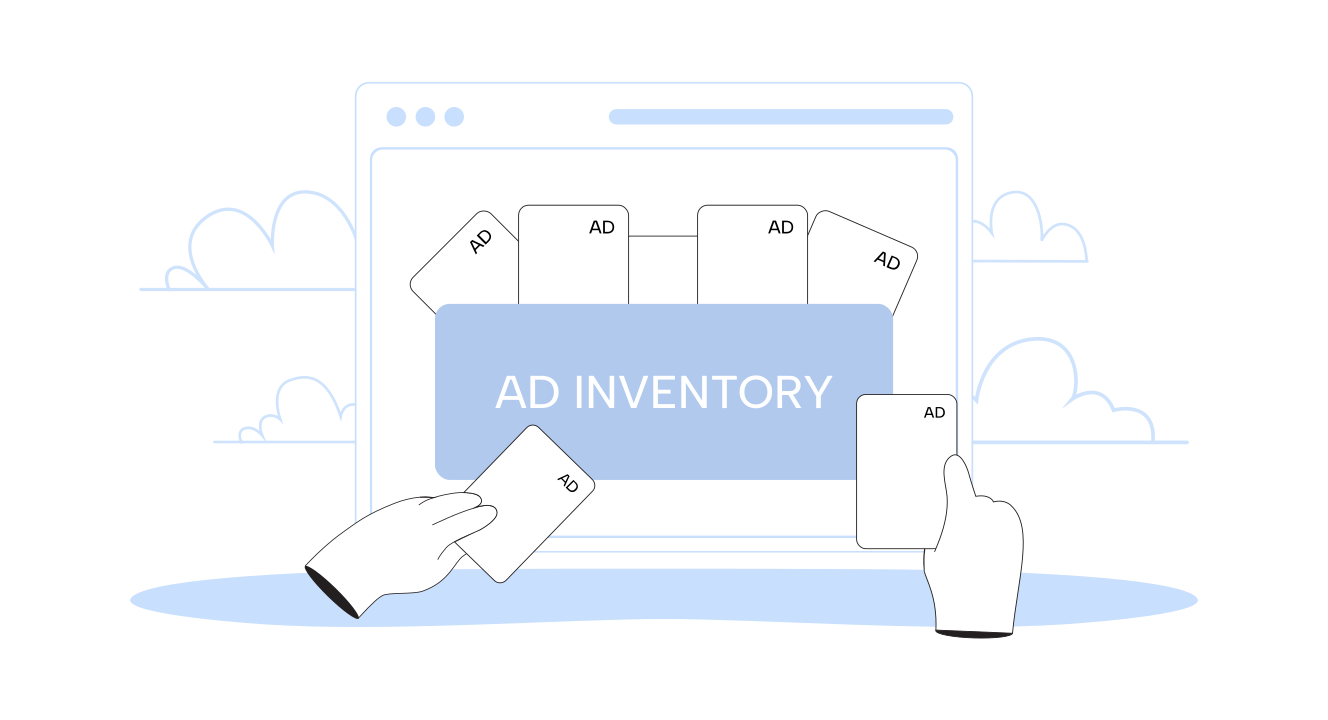
Ad inventory, which refers to the available ad space of a website, app, or digital product, is essential for publishers and advertisers in the programmatic advertising industry. Therefore, ads are displayed based on inventory type, placement, and cost efficiency to reach the desired target audience and increase revenue.
In today’s article, we will discuss everything you need to know about ad inventory: what it is, the various types, how it works, and other influential factors that directly impact inventory performance.
Table of contents
What is Ad Inventory?
Ad inventory represents the total amount of a publisher’s selling ad space on websites, mobile devices, and apps. Although the official term originated in the print media, it is now primarily used in AdTech and programmatic advertising solutions.
Traditionally, an advertiser must buy ad space manually by contacting the publisher’s sales representative.
However, you can do it through the algorithmic software of different AdTech and programmatic advertising solutions. The platform’s traffic and number of available ad slots determine the inventory.
How Does Ad Inventory Works?
The process is simple: advertisers and publishers buy and sell inventory through SSPs, DSPs, Ad Exchanges, and other Ad Inventory Management tools. These buyouts use an impression-based cost model, such as Cost-per-Mille (CPM).
Traditionally, these buyouts were done manually. However, technological progress has enabled these transactions to be automated; thus, programmatic advertising plays a vital role.
These solutions aggregate and automate the process from serving the best ad space to the highest bidders based on the estimated impressions and depending on the bidding type, such as RTB, header bidding, in-app header bidding, and other programmatic deals.
However, the inventory can also bypass the auction through Programmatic Guaranteed (PG), which automates the Request for Proposal and thus enables 1:1 negotiation between advertisers and publishers.
The Significance of Ad Inventory
Ad inventory determines how much ad space is available on a publisher’s website, app, or digital product for the advertiser to promote its goods and services to potential or existing customers.
Another essential aspect is that ad inventory usually has a limited quantity, especially the premium inventory, so the bidding process is competitive.
Also, the inventory directly affects publishers’ revenue, as their main goal is to sell ad space within their digital products, websites, apps, and other services.
In contrast, it is more about balancing ad inventory quality and the lowest possible price for advertisers. Indeed, it’s far-fetched, as the more valuable the inventory, the more competitive it will be.
Types of Ad Inventories

Ad inventories are divided into two types based on different factors, such as quality, placement, and platform type. Thus, there is premium and remnant inventory.
1. Premium Ad Inventory
This type of ad inventory is premium, just as the name suggests. This means it has the highest value for the targeted audience, engagement quality, and visibility, which translates to increased ROI.
Usually, premium ad inventory has ad placement right above the fold or at the top of the page.
2. Remnant Ad Inventory
Remnant ad inventory has ad spaces that have yet to be sold firsthand, and as a result, these spaces are sold at a lower cost through ad networks or Real-Time Bidding (RTB) ad exchanges.
This type of ad inventory is well suited for those with a limited budget as it allows them to advertise their offerings at lower costs.
3. Mid-tier Ad Inventory
This one balances the premium and remnant ad inventory as it offers decent visibility and engagement at reasonable prices. Thus, it still attracts potential customers, but its position is after the premium ad spaces. Mid-tier ad spaces can be found in banners or inside related articles.
Moreover, 81% of digital advertising revenue will be generated through programmatic advertising by 2028, and another study advised that 97% of advertisers are buying premium ad inventory compared to 48%, which stated that cheaper ad inventory is essential to them.

Statista – Willingness to pay for quality inventory in Europe 2022
Indeed, big advertisers pay for quality and premium features, and small-medium businesses benefit from lower inventory and spaces.
How to Calculate Ad Inventory
Ad inventory refers to the total ad space available or for sale, making it an essential factor for advertisers and publishers when determining revenue. Thus, here’s how to calculate the inventory:
Page Impressions:
This advertising metric is used to measure one ad at a time. Depending on it, publishers could increase or decrease prices for the ad slot.
Ad Value:
Publishers usually determine the advertising value, which they calculate by multiplying impressions by the average number of ads on a specific page.
Fill Rate:
This one refers to how much ad space a publisher rented compared to what he has vacant. The higher the fill rate, the better for revenue.
Revenue Model:
As the name suggests, the revenue model implies that advertisers only pay when the ad generates the required action, which can be a click, a generated lead, and others.
However, these aren’t the only factors you must acknowledge; demographics, ad space location, and the number of ads also play vital roles.
The Best Ways to Buy and Sell Ad Inventory

You can buy or sell ad inventory in many ways, depending on what side you’re on, an advertiser or publisher. So, let’s get to it so you can choose what fits best.
Real-time Bidding (RTB)
Each platform that uses RTB implies a quick, on-the-spot auction for a specific ad space. The highest bidder gets the inventory. Therefore, this bidding method is fully automated, secures the highest bidder for the publisher, and makes everything accessible through one dashboard.
In contrast, the traditional bidding system is lengthy and requires publishers to make multiple touchpoints to monetize their ad inventory.
Thus, real-time bidding offers many other benefits besides automation, such as much control over the selling process. This bidding method is often used in SSPs, such as Sevio Ad Manager, easing the selling process for all publishers.
Moreover, paring the efficiency of RTB with a robust SSP that seamlessly blends a user-friendly design with advanced technologies and easy-to-follow analytics to help you alleviate your ad inventory buying process.
Programmatic Direct (PD)
As we briefly mentioned, there are many programmatic deals, and PD is one of them and involves 1:1 ad buying. Thus, the publisher sets the price, and the advertiser accepts or declines it.
One such platform is Google Ad Manager, whereby the publisher sets the programmatic direct contract, and the advertiser either approves the terms or declines.
Private Marketplace (PMP)
This method is invite-only based since the publisher only selects a group of advertisers to bid against each other, and the highest bidder wins. There are no middlemen; this method offers advertisers more control over their brand appearance.
OpenX is a platform that offers real-time bidding, private marketplaces, and other programmatic deals, yet it is complex.
Direct Sales
This method doesn’t use programmatic features; the publisher’s team contacts the advertisers directly to propose deals. Indeed, it offers exclusivity, but what if the deals are refused? The outreach process could be more daunting.
Top Ad Inventory Pricing Models
We discussed ad inventories, how they are calculated, and their types, yet it’s time to see the most common inventory pricing models. This way, both publishers and advertisers can estimate revenue or budgets.
1. Cost Per Thousand Impressions (CPM)
CPM, or cost per thousand impressions, is a pricing model that monetizes views per thousand impressions, as the name suggests. This model is most often used for brand awareness.
2. Cost Per Click (CPC)
CPC means that an advertiser pays only when a user clicks on an ad. Thus, advertisers are paying for an actual engagement.
3. Cost Per Acquisition (CPA)
CPA charges only when a specific action or event is completed, such as sign-ups, sales, downloads, etc.
Discover What Type of Ad Inventory Works for Your Brand

The key to managing successful campaigns lies within your tools; thus, a robust inventory and management platform could differentiate you and set your business up for success.
Therefore, at Sevio, we don’t simply manage your ad space; our advanced features help your business reach its target audience while taking the pressure of selling off your shoulders.
From managing two types of ad inventory, setting your ad preferences, and cost-efficient pricing models to multiple reporting to ensure your business generates and increases ROI, Sevio could be your partner to supercharge your earnings. Let’s talk!
Was this helpful?