

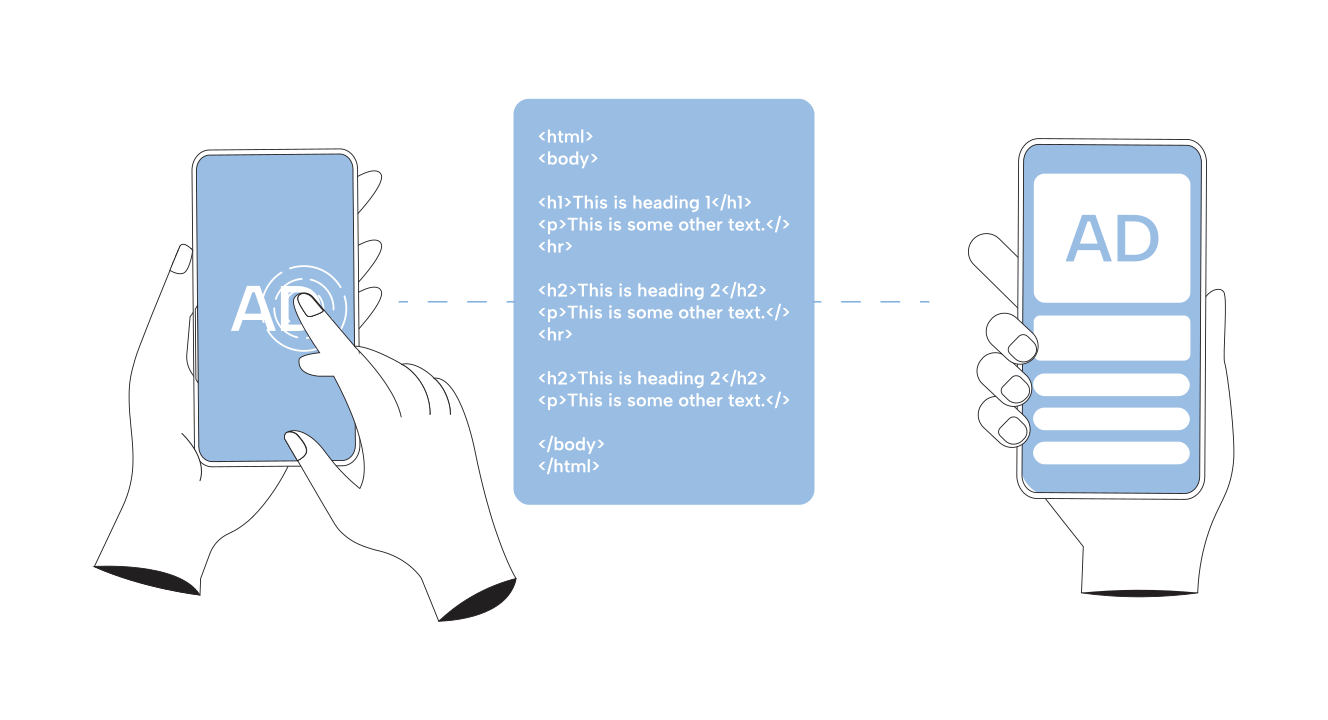
For many publishers, selling ad space can feel unpredictable. You list inventory, but the results vary, as such one day it’s fully sold out, the next you’re staring at low fill rates and unclaimed impressions. Without knowing who’s bidding on your ad space or how much your inventory is truly worth, it’s easy to leave money on the table.
If you’re a publisher looking to understand how programmatic ads actually work and how to earn more per impression, it all starts with the bid request.
Bid requests are the heartbeat of real-time bidding. Every time a user loads your site, a bid request tells advertisers: here’s the audience, context, and opportunity. In milliseconds, those advertisers decide how much they’re willing to pay, determining your final revenue.
In this guide, you’ll learn exactly what a bid request is, how it works in programmatic advertising, and the best practices publishers can use to improve monetization and transparency.
Table of contents
What is a Bid Request?
A bid request is a message sent by a publisher’s supply-side platform (SSP) or ad exchange to demand-side platforms (DSPs) and advertisers each time an ad impression becomes available on your site or app.
It contains detailed information about the impression opportunity, such as device type, location, browser, and contextual data about the page or app. Advertisements can decide whether to bid and how much they will pay.
How Bid Requests Work in Real-Time Bidding?

Now that you know what a bid request is, let’s clarify it. Here’s how it works in practice:
- A user lands on a website or opens an app.
- The site (through the publisher’s ad server) detects an available ad slot.
- The publisher’s SSP or ad exchange generates a bid request containing all relevant data and sends it to multiple advertisers.
- Through their DSP, each advertiser analyzes the request using user data, page context, device type, and other factors to decide whether to bid, a process explained in detail in Google’s Authorized Buyers RTB documentation.
- The highest bid wins, and the ad is instantly shown to the user.
Why is a Bid Request Necessary?
Without bid requests, programmatic advertising wouldn’t be possible. They serve as the foundation for real-time decision-making in ad auctions, ensuring:
- Maximize Revenue – Each bid request triggers a real-time auction, ensuring your ad space sells to the highest bidder and boosting earnings.
- Precision Targeting – By sharing anonymized user and contextual data, bid requests attract advertisers willing to pay more for relevant impressions.
- Better User Experience – More relevant ads mean less disruption, higher engagement, and improved audience retention.
- Data-Driven Optimization – Insights from bid requests help you fine-tune pricing and inventory to maximize performance.
- Broader Demand Access – Bid requests open your inventory to various advertisers, increasing fill rates and competition.
Bid Request Components
A bid request carries detailed metadata about the impression, enabling advertisers to assess whether it aligns with their campaign goals and determine how much they will bid for your inventory.
Here are the core components publishers include in a bid request:
- User Information – Details include the user’s IP address, device type, browser, operating system, and sometimes general location (city or region). This information helps buyers evaluate the relevance of your audience for their targeting needs.
- Ad Inventory Details – Information about where the ad will appear, including your website or app name, ad placement (e.g., banner, video), and ad format. This showcases the quality and context of your available inventory.
- Contextual Data – Signals about the content of the webpage or app, such as keywords and other context clues. This allows advertisers to match their ads to relevant environments and helps you attract higher-value campaigns.
- Time and Date Stamps—The exact moment the ad auction occurs can influence bidding strategies and help you understand peak demand times.
- Unique Identifiers – Data points like device IDs, cookies, or other tracking mechanisms that can help link user behavior across different websites and apps, where permitted by privacy regulations.
It’s important to note that not every bid request includes all this data. Factors such as user privacy settings (like iOS 14+ restrictions), ad blockers, and your data policies can limit what information is shared.
Disclaimer. A bid request is a single message containing detailed information about one ad impression opportunity on your site or app. Bidstream data refers to the ongoing stream of all these bid requests and their data as they move through the programmatic ecosystem.
In short, every bid request is part of the larger bidstream, but the terms are not interchangeable: bid request is the individual message, while bidstream data is the collective flow of all such messages. It’s important not to confuse the two terms, as they describe different layers of the programmatic process.
Want to understand bidstream data better?
Dive deeper into how bidstream works and why it’s crucial for publishers in our detailed guide.
Read the Bidstream GuideBid Request Best Practices & Optimization for Publishers
Enhance Data Accuracy
The more detailed and accurate the bid request data, the higher the chances of attracting competitive bids. Publishers should ensure they provide high-quality user data (without violating privacy regulations), precise geolocation and device details, viewability metrics, and brand safety scores.
Ensure Brand Safety
Advertisers want to avoid placing ads on unsafe or irrelevant content. Publishers should implement:
- Content category filtering to exclude risky topics;
- Ad quality controls to prevent low-quality or misleading ads;
- Verification tools to maintain trust with advertisers.
Optimize Page Load Speed
Slow-loading pages lead to lower ad viewability and lost revenue. Optimize image sizes and lazy-load ads to improve speed, minimize JavaScript and third-party scripts, and use a Content Delivery Network (CDN) for faster asset loading.
Ensure Accurate Ad Placement Information
Including precise ad placement details in your bid request (such as whether the ad is above or below the fold, the placement size, or location on the page) can improve bid accuracy. Advertisers often pay more for premium ad placements, so including this in your bid request ensures you’re attracting the right bids.
Implement Header Bidding
Instead of a single ad exchange determining prices, header bidding allows multiple demand sources to bid simultaneously. This increases competition and boosts publisher revenue.
Adhere to OpenRTB Standards
The OpenRTB protocol enables real-time bidding (RTB) across multiple demand sources. Ensure your bid request follows these standards for consistency, easier integration, and better compatibility with demand partners.
FAQ
A bid is an offer made by an advertiser to purchase ad space from a publisher. The higher the bid, the better the chance of winning the ad placement. Bids create competition for ad space, helping publishers maximize their revenue.
A bid request is a call for bids from DSPs, while a bid response contains the advertiser’s bid amount and ad creative.
An RFP (Request for Proposal) is a formal request from a publisher to invite advertisers to submit proposals for a specific ad campaign. It is often used for negotiated pricing. A bid request is used in real-time bidding (RTB), where multiple advertisers compete instantly for ad space based on user data and available inventory. RFPs are for direct deals, while bid requests are part of automated auctions.
Bid requests may include identifiers like IP addresses, but regulations like GDPR and CCPA enforce strict privacy controls.
The entire RTB process, from bid request to ad serving, happens in under 100 milliseconds.
If no valid bids are received, the ad slot may display a fallback ad, a house ad, or remain unfilled.
The ad won’t be shown if all the bids are below the publisher’s floor price (the minimum they’re willing to accept). The ad slot might stay empty or fill with a fallback ad, which usually brings in much less revenue or none.
There are a few reasons. The user might not match any advertiser’s targeting criteria, the page content might be low quality, there could be technical issues during the auction, or the impression just isn’t considered valuable enough. If no one sees potential in it, no bids come in.
Final Thoughts
Bid requests are the foundation of programmatic advertising, powering every real time auction that determines which ads appear on your site and how much revenue you earn. By understanding how bid requests work, what data they include, and how to optimize them, publishers can capture the full value of every impression.
Improving data accuracy, page speed, and OpenRTB compliance helps attract higher quality bids and increase overall yield.
Mastering bid requests empowers publishers to maximize revenue and transparency in every auction.
Explore how Sevio Ad Manager simplifies programmatic monetization, improves visibility into bidstream data, and helps you get the most out of every impression.
Was this helpful?