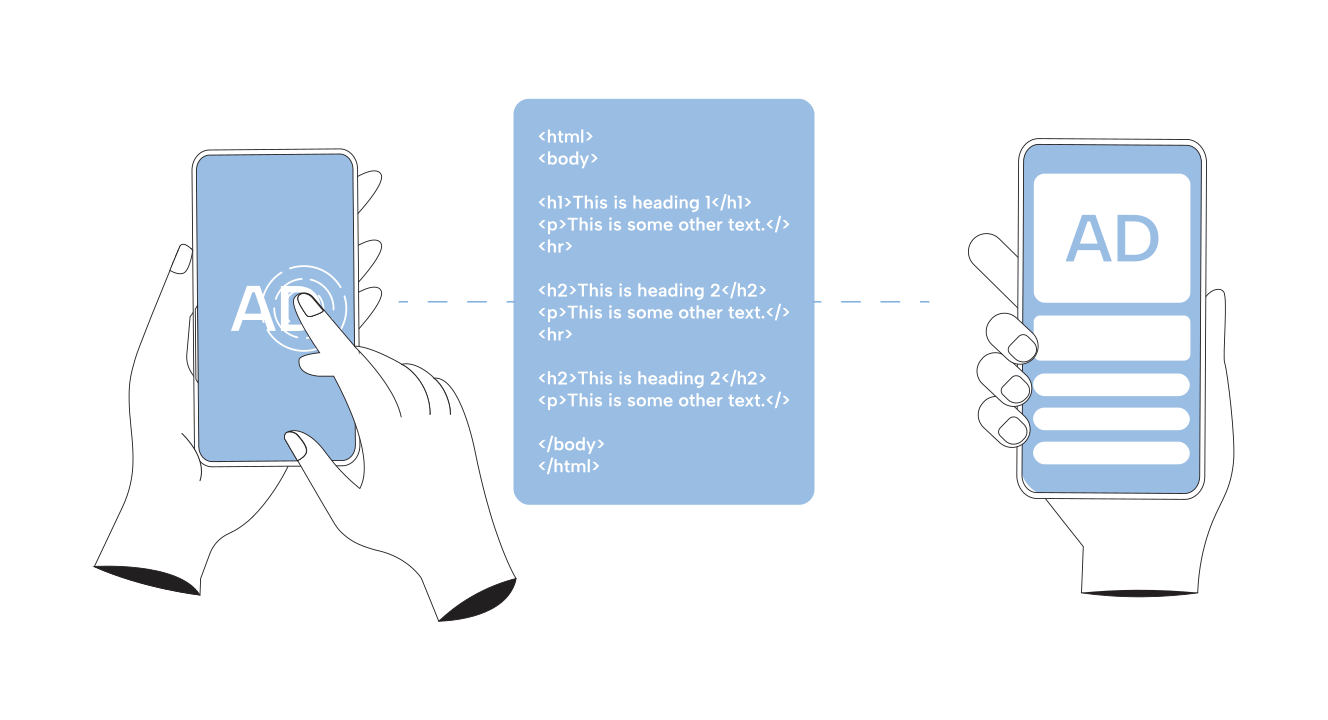


If you’re a publisher, maximizing the effectiveness of your ads can be challenging. With so many factors, such as pricing, demand, and inventory, to balance, it’s easy to feel that you’re not getting the best return on your ad space.
Without a solid strategy, you may be underestimating your ad inventory or relying too heavily on a single source. This can result in lower earnings, missed opportunities, and suboptimal fill rates. As the advertising market continues to evolve, it is essential to have a smart way to manage your inventory.
That’s where ad yield management comes in. You can increase your earnings by employing effective strategies to price ads accurately and manage your inventory.
In this guide, we’ll explain the key concepts of yield management and how they can help you maximize your ad inventory.
Table of contents
- What is Ad Yield Management?
- Is Ad Yield Management Essential for Publishers?
- Key Components of Yield Management Pricing
- Tools and Technologies for Yield Management
- Benefits of Ad Yield Management
- Challenges in Yield Management
- Best Practices for Implementing Yield Management in Advertising
- Final Thoughts
What is Ad Yield Management?
Ad yield management optimizes the ad revenue generated from online ad inventory by adjusting real-time pricing, ad placements, and demand sources.
Thus, publishers use this strategy to maximize ad revenue while maintaining a good user experience. It is about setting the right price, using the best bidding strategies, and ensuring every ad placement works as hard as possible.
The concept of yield management originated in the airline and hotel industries, where prices fluctuate based on demand. It works similarly in advertising.
Publishers adjust ad prices, manage inventory, and optimize revenue through yield management pricing, ensuring that advertisers pay top dollar for prime spots while maintaining strong fill rates and a great user experience.
Is Ad Yield Management Essential for Publishers?

If you’re a publisher, ad revenue keeps the lights on. But without a solid yield management strategy, you might be leaving money on the table—or scaring off advertisers with the wrong pricing. It’s a balancing act between making the most of your ad space and keeping advertisers (and your audience) happy.
Here’s what a well-optimized yield strategy does:
- Boosts revenue by fine-tuning ad pricing and bidding strategies.
- Keeps ad fill rates high, so no ad space goes to waste.
- Protects the user experience by preventing too many or irrelevant ads.
- Optimizes demand sources, combining direct deals, programmatic ads, and header bidding for maximum returns.
When done correctly, yield management converts ad inventory into a predictable and steady income stream.
Key Components of Yield Management Pricing

Ad yield management pricing is all about smart pricing. It ensures that your ad space sells for what it’s worth, not just for a small change.
So, how does it work? It uses a mix of clever strategies to keep your revenue growing.
- Dynamic Pricing
Ad prices change in real-time based on demand and competition.
- Floor Price Optimization
Setting a minimum price to avoid underselling premium placements.
- Real-Time Bidding (RTB)
Let advertisers compete in milliseconds for each impression.
- Header Bidding
Inviting multiple demand partners to bid simultaneously, driving up prices.
- Demand Path Optimization (DPO)
Identifying the most profitable demand sources and prioritizing them.
- Fill Rate Management
Ensuring ad slots are filled without sacrificing profitability.
- Ad Format Strategy
Testing different ad types, sizes, and placements to maximize engagement and revenue.
Tools and Technologies for Yield Management
Effective yield management depends on leveraging the right technology to optimize ad revenue. Here’s a breakdown of the essential tools publishers need to maximize earnings:
- Data Analytics Platforms – Platforms like Google Analytics provide valuable insights into user behavior and ad engagement, helping publishers make informed pricing and inventory management decisions. These insights drive higher revenue by enabling smarter targeting and optimized ad strategies.
- Ad Servers – Google Ad Manager is an ad server where publishers manage their inventory, track performance, and optimize ad placements.
- Header Bidding is an essential tool for maximizing revenue. It allows multiple advertisers to bid for each ad placement simultaneously, increasing the value of impressions and resulting in higher CPMs.
- Supply-Side Platforms (SSPs) – Instead of using several SSPs, Sevio Ad Manager centralizes everything for publishers: real-time bidding to maximize revenue, seamless integration of native ads and customizable ad sizes, and branded sales pages allowing advertisers to purchase directly from publishers. Sevio Ad Manager provides complete control over ad sales, eliminating the need for intermediaries and simplifying revenue management.
- Dynamic Price Floor Optimization – Dynamic pricing ensures publishers never sell below value. This AI-powered pricing allows publishers to stay competitive while protecting premium inventory.
Benefits of Ad Yield Management
So, why should publishers bother fine-tuning their ad yield management strategies? Because the benefits are huge:
- More Money – Higher bids, smarter pricing, and better inventory management all mean more revenue.
- Better Fill Rates – No wasted ad space, just optimized earnings.
- Happier Users – The right ads in the right places improve user experience, reducing bounce rates.
- Stronger Advertiser Relationships – When advertisers get value, they keep coming back.
- Flexibility in Changing Markets – Real-time pricing adjustments help publishers adapt to shifts in demand.
- Multiple Revenue Streams – Spreading demand across different platforms reduces risk.
Challenges in Yield Management
Even if it comes with great benefits, it’s not all smooth sailing. Yield management has its share of challenges, including:
- Ad Fraud & Invalid Traffic – Fake impressions hurt credibility and revenue, so publishers must monitor traffic quality.
- Balancing CPMs and Fill Rates – Overpricing leads to unsold ads; underpricing leaves money on the table.
- Ad Blockers & Privacy Laws – Growing ad-block usage and strict regulations (GDPR, CCPA) impact monetization.
- Managing Multiple Demand Sources – Juggling different SSPs and networks can get complicated fast.
- Data Accuracy & Attribution Issues – Optimizing performance is nearly impossible without proper tracking.
Best Practices for Implementing Yield Management in Advertising

To get the most out of yield management, publishers must adopt a structured strategy that includes AI-driven automation, diversified demand sources, real-time bidding, and continuous performance analysis. But knowing what to do is one thing; effectively implementing is another.
Let’s break down the best practices that ensure yield management isn’t just a buzzword but a real revenue booster.
Leverage AI & Automation for Smarter Pricing
Gone are the days when publishers could manually set floor prices and hope for the best. The ad ecosystem moves too fast, and advertisers demand real-time responsiveness. That’s where AI and automation can help.
Yield management platforms powered by machine learning continuously analyze market trends, user behavior, and historical bid data to optimize pricing in real-time. Instead of relying on static rates, AI ensures that each impression is sold at its maximum possible value by adjusting floor prices based on demand fluctuations, time of day, user demographics, and advertiser bidding behavior.
Automation also helps eliminate human error. With millions of bid requests happening every second, manual oversight is impossible. AI ensures that underpriced impressions don’t slip through the cracks and that high-value impressions go to the highest-paying advertisers.
Implement Header Bidding to Increase Competition
The traditional waterfall auction model leaves money on the table by giving first dibs to a single demand source before moving down the chain. Header bidding disrupts this model by allowing multiple advertisers to bid simultaneously in a unified auction, ensuring that the highest bid always wins.
Publishers who implement header bidding correctly often see a 15-30% increase in revenue simply because it creates a fairer, more competitive bidding environment. Instead of selling impressions at pre-set prices or accepting the first available bid, publishers can let advertisers fight for inventory in real-time.
But not all header bidding setups are equal. Client-side vs. server-side header bidding presents a crucial decision. While client-side bidding ensures higher visibility for demand partners, it can slow down page load times. Server-side bidding reduces latency but may offer slightly less transparency. A hybrid approach often delivers the best results, balancing speed, competition, and revenue performance.
Set Smart Floor Prices (Without Driving Buyers Away)
Floor prices are the minimum acceptable bid for ad inventory, ensuring that premium placements don’t sell for less than they’re worth. But setting the wrong floor price can be just as damaging as having none.
A smart floor price strategy involves continuous adjustments based on historical performance, demand levels, and audience data. Publishers should use dynamic floor pricing instead of a static minimum bid, which increases or decreases automatically based on market conditions.
For example:
- If demand is high, floor prices should increase to capitalize on advertiser interest.
- If demand is low, floor prices should drop slightly to maintain fill rates while avoiding unsold inventory.
Finding the right balance prevents undervaluing impressions while ensuring advertisers remain engaged.
Regularly Analyze Performance Data for Continuous Optimization
Yield management is not a “set it and forget it” strategy. Publishers need constant monitoring and optimization to ensure their pricing, demand, and ad placements remain competitive.
Key performance indicators (KPIs) to track include:
- CPMs (Cost per Thousand Impressions) – Are ad placements achieving optimal pricing?
- Fill Rate – Is inventory fully utilized, or are floor prices too high?
- Viewability Scores – Are ads positioned effectively for engagement?
- CTR (Click-Through Rate) – Are the ads resonating with the audience?
- Latency & Load Speed – Are high ad densities slowing down the site?
By regularly reviewing data, publishers can make targeted optimizations, such as adjusting floor prices, experimenting with new demand partners, or restructuring ad layouts for better engagement.
Experiment with Different Ad Formats to Maximize Engagement & Revenue
Not all ad formats generate the same revenue. A successful yield management strategy involves experimenting with:
- Display Ads – Standard banners that work well across desktop and mobile.
- Video Ads – Higher CPMs but require careful placement to avoid disrupting UX.
- Native Ads – Blended content that improves engagement without being intrusive.
- Interactive & Rich Media Ads – Engage users through interactive elements.
The best format depends on audience behavior. Some websites thrive on video and high-impact creative ads, while others benefit from seamless native placements. A/B testing different formats, placements, and creative styles helps identify the most effective mix for revenue growth.
Optimize User Experience (UX) & Page Speed to Retain Audiences
A highly monetized website is worthless if it drives users away due to slow load times and intrusive ads. Studies show that:
- A 1-second delay in page speed can reduce conversions by 7%.
- Sites with excessive pop-ups and autoplay videos see 30% higher bounce rates.
Google’s Core Web Vitals now prioritize fast, user-friendly experiences, meaning publishers who overload their pages with heavy ads could see SEO penalties and traffic drops.
To balance ad revenue with user retention, publishers should:
- Limit intrusive ads that block content or auto-play audio.
- Optimize ad load speeds by using lightweight scripts and asynchronous loading.
- Use lazy loading for ads below the fold to improve page speed.
Through these, you keep users engaged while ensuring advertisers still get visibility.
Final Thoughts
Ad yield management is key to maximizing your ad space. Adjusting prices, using tools like header bidding, and monitoring your performance can boost your revenue while keeping things smooth for your users.
With a little effort, you can optimize your ads, keep things simple, and see better results. It’s all about finding the right balance and making smarter choices.
Was this helpful?