
How do you compete in a $663 billion global ad market when everyone else is fighting for the same ad dollars?
Traffic alone isn’t enough. Many publishers, whether they use AdSense, Ezoic, or a premium SSP like Sevio, miss out on untapped revenue. The real question is: How can you increase ad revenue from your existing visitors without compromising user experience?
We also gathered insights from Tiberiu, one of our co-founders and Head of Business Development at Sevio. He notes that publishers who adopt smarter monetization strategies through optimized ad placements, real-time analytics, and flexible approaches often experience substantial ad revenue growth within just a few months.
For instance, one publisher grew revenue by 178% after switching to Sevio’s Ad Manager, a transformation that included smarter ad placements, multiple demand sources, and full ad operations support.
In this guide, you will discover nine proven monetization strategies for increasing ad revenue in 2026 using a smart, flexible approach.
Let’s dive in!
Table of contents
Key Challenges for Publishers: Privacy Laws and Ad Blockers

Privacy laws and ad blockers are two of the biggest challenges publishers face in growing their ad revenue.
Rules like the GDPR and CCPA protect user data, but they also make it harder to collect insights and show relevant ads. If users don’t consent, publishers lose access to valuable targeting tools, which can lower ad performance.
Ad blockers are another growing problem. Around 32.8% of global internet users use ad blockers, which means fewer people see your ads, reducing clicks and earnings. To address these issues, publishers require ad platforms that adhere to privacy regulations, respect user preferences, and facilitate non-intrusive ad formats. This helps build trust while protecting revenue.
Finally, ensure your website monetization platform supports consent management tools and follows recognized standards like IAB Europe’s Transparency & Consent Framework (TCF) v2.2. This will protect your business from legal risk and build user trust, essential to sustainable ad revenue growth.
Let’s explore how understanding your target audience sets the foundation for monetization success.
9 Ways to Maximize Ad Revenue Without More Traffic
1. Improve Your Ad Placement Strategy

Where and how you place ads on your website or in-app can significantly affect your revenue. Effective ad placement enhances visibility, boosts click-through rates (CTR), and effectively engages users.
Start with above-the-fold placements. This means placing ads in the part of the screen that users see first, without needing to scroll. According to NN Group studies, users spend nearly 57% of their viewing time above the fold, making it a valuable area for ad performance.
Next, consider using sticky ads. These are ads that stay on the screen while users scroll. For example, a sticky footer banner or sidebar ad can remain visible longer, resulting in more impressions and clicks without interrupting the content experience.
Then, enable lazy loading to make your site load faster and smoother. This feature loads ads only when they’re about to appear on the screen. Lazy loading enhances site speed and boosts user engagement, particularly on mobile devices.
Use tools like heatmaps (e.g., Hotjar, Microsoft Clarity) to identify high-activity zones on your pages. Placing ads in areas where users already focus, like between content blocks or next to popular sections, can improve CTR without cluttering the page.
You can automate much of this using a website monetization platform like Sevio Ad Manager. With Sevio, you can:
- Place ads where they perform best.
- Enable sticky units with no coding.
- Turn on lazy loading to improve speed.
- Control placements by device or user type.
Thus, smart ad placement means placing your business ads where they are most effective.
2. Use Smart Ad Refresh

Smart ad refresh helps publishers earn more from visitors who stay on a page without increasing ad clutter. It works by reloading an ad in the exact placement after a set time, only if it is still visible to the user.
This approach can nearly double your viewable impressions. According to Chartbeat, refreshing ads every 10 seconds can increase viewable ad impressions by up to 93%, without lowering ad visibility. That means more chances to monetize each page visit.
Viewability-triggered refresh also enhances ad quality, allowing for viewability-based refresh. That’s better ad inventory for advertisers and better revenue for publishers.
Smart refresh in real-world usage yields tangible benefits. One publisher using an active user-based refresh saw a 14% increase in desktop viewability and a 5% rise in paid impressions, while reducing unwon impressions by 11%.
Tiberiu explains:
A few simple rules distinguish a good ad refresh. First, refresh ads only when they’re visible on the screen. Keep the refresh interval sensible; 30 to 60 seconds is ideal. Use behavior-based triggers, such as scrolls or clicks, to ensure the refresh matches user activity.
Sevio Ad Manager makes applying these rules easy. You simply select your refresh settings and the zones where they are used, and the system handles the rest automatically. This drives more viewable impressions while maintaining a smooth and fast experience.
3. Optimize for Mobile

More than half of all ad revenue now comes from mobile apps and websites. App Developer Magazine reported that mobile app ads accounted for 66% of total revenue in 2024, reaching $344 billion globally. To improve mobile monetization, see how to boost your in-app advertising revenue using smart placements and formats.
With so many users on mobile devices, making ads work effectively on small screens is essential. A slow or poorly displayed ad can deter users, leading to reduced traffic and revenue.
Studies show that websites loading in 1 second convert 3 times better than those taking 5 seconds. A one-second delay can cut conversions by up to 7%. Slow pages are even worse on mobile, and over 53% of users leave if a page takes longer than 3 seconds to load.
To boost mobile ad revenue:
- Utilize mobile-first designs with responsive layouts that adapt to various screen sizes.
- Choose mobile-sized ad formats, such as 300×50 banners or sticky footers, that fit small devices.
- Enable lazy loading to load ads only when they come into view, saving bandwidth and speeding up page load times.
For example, with Sevio Ad Manager, you can choose different ad formats for mobile devices. The platform handles loading logic and format adjustments without slowing your site. As a result, it ensures that ads fit small screens and load fast, helping boost revenue while keeping users engaged.
Thus, in 2026, optimizing mobile ad performance is a key factor for maximizing ad revenue.
4. Frequency Capping and User Experience

As we know, showing too many ads to the same user can do more harm than good. When people repeatedly see the same ad, they tend to stop paying attention or leave your site, which can harm user experience and earnings.
That’s where frequency capping helps. It limits how often an ad is shown to a single user during a session or over a full day, keeping your ads fresh and less annoying.
Research from HubSpot in 2020 shows that 66% of users think online ads are too repetitive, and 91% believe ads today are more intrusive than they were a few years ago. Therefore, publishers can reduce bounce rates and increase trust by controlling the frequency of ad appearances.
A better experience means more time on site, more page views, and increased opportunities for ads to perform effectively. Clean layouts and well-spaced ads are also more likely to pass Google’s Core Web Vitals tests, which help with SEO and ranking.
On the other hand, Sevio Ad Manager allows publishers to apply frequency caps per placement, per user, or per time interval. You can show fewer ads, but make each count more, keeping users and advertisers happy.
Moreover, smart frequency control is a key part of long-term revenue growth. It protects the user journey while ensuring high-quality ad impressions.
5. Leverage Header Bidding

Header bidding is one of the best ways to increase ad revenue. It allows multiple ad platforms to bid on your ad space simultaneously instead of waiting in a fixed order like in the traditional waterfall setup. When more advertisers compete for your inventory simultaneously, you get higher bids and better prices, which means more money for the same ad space.
It is said that header bidding websites can earn up to 40% more revenue than waterfall-only setups. Thus, header bidding also increases ad fill rates and ad quality. The winning ad is usually more relevant and valuable when bidding in real-time and incorporating multiple demand sources.
Since header bidding solutions provide more control and value for every impression, it’s a smart step for publishers seeking to grow revenue without adding more ad units.
For example, Sevio Ad Manager offers built-in header bidding support. It connects with trusted platforms, allowing publishers to do header bidding without coding. You can also combine header bidding with direct deals, all managed from one dashboard. It’s simple, efficient, and hassle-free.
6. Segment Traffic by GEO and Device

Not all traffic is equal. Where your users come from and their devices can significantly affect how much you earn from ads.
Advertisers pay more to reach users in high-value regions. For example, according to AsterioBid, the average CPM in the United States is $1.43, while in Vietnam it’s just $0.15, and across much of Asia it averages around $0.40. That means, depending on your audience location, the same ad can bring in 10 times more.
The same idea applies to devices. Desktop users may stay longer and interact more, while mobile users may scroll faster but return more often. Knowing this helps you select the most effective ad formats, sizes, and placements for each device type.
- Segmenting your traffic helps you:
- Set pricing rules based on user location;
- Show different ads for mobile vs. desktop;
- Choose the best time and format to display each ad;
- Increase CPMs by targeting high-value audiences.
To give publishers complete control over ad delivery by GEO, device, operating system, and browser, Sevio Ad Manager sets different rules for each placement. He tests what works best for each group. Therefore, segmenting traffic makes your ads more relevant and less disruptive to users.
7. Use Real-Time Analytics

To grow your ad revenue, you need to know what works and what doesn’t immediately generate revenue. Real-time analytics show how your ads perform while users are still on your site. Thus, you can adjust faster, improve results, and avoid losing money on underperforming placements.
With real-time data, you can:
- Track impressions, clicks, and earnings instantly.
- Discover which ad formats and placements yield the best results.
- Compare performance by device, location, and time.
- Spot problems quickly, like ads not loading or low viewability.
Moreover, real-time measurement helps improve ad effectiveness and campaign return, especially when paired with optimization tools.
If publishers want access to live analytics through a clean, easy-to-use dashboard, Sevio could be the best SSP. It provides a comprehensive analysis of placements that receive the most clicks, where users tend to drop off, and which ad strategies generate the most revenue. The dashboard also facilitates A/B testing, allowing you to compare different versions and select the one that performs better.
Having this data at your fingertips enables you to make more informed decisions, test new ideas, and enhance your results. The faster you see the data, the quicker you can grow.
8. Test and Iterate
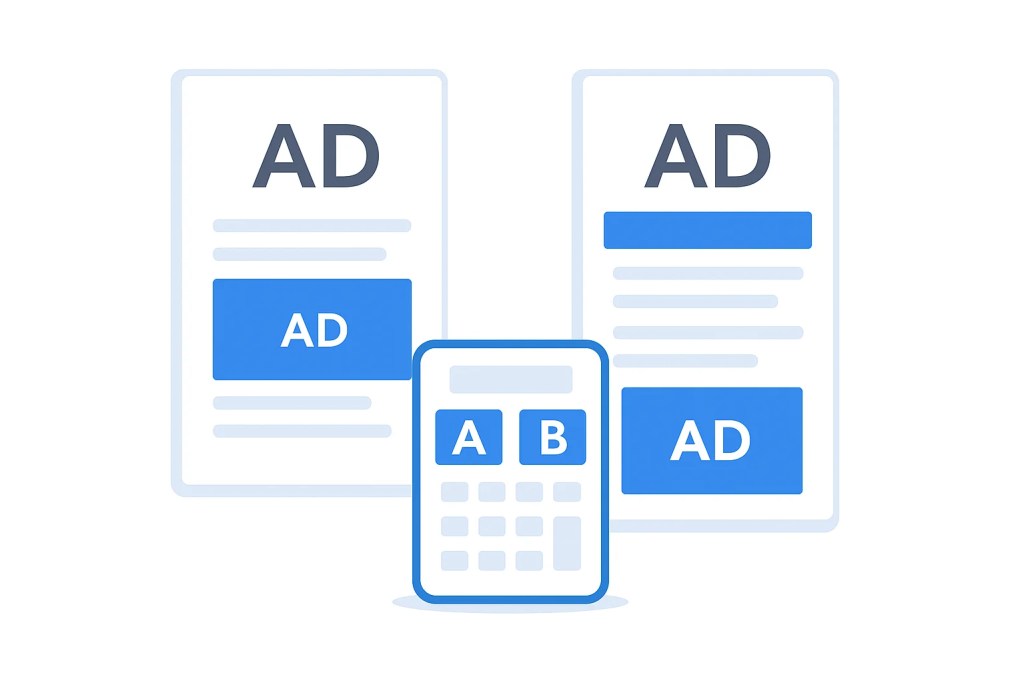
There is no perfect ad setup that works for everyone. The best way to increase ad revenue is to test different ideas and improve what is working through A/B testing. As a result, with Sevio Ad Manager, testing and tracking results in real time is easy. You can see what performs best and make quick decisions based on data, not guesswork.
9. Choose the Right Monetization Platform

Selecting the right ad partner is one of the most important decisions you’ll make as a publisher. As the saying goes, “If you want to go fast, go alone. If you want to go far, go together,” right? Your ad monetization platform of choice greatly influences how much money you earn from ads. A good platform helps you earn more, gives you control, and keeps your website or app running smoothly.
Choosing the right ad partner involves more than selling your ad space, and many publishers start with easy-to-use tools like Google AdSense or Ezoic. These tools often offer limited control and may not yield the best possible revenue.
Platforms like Sevio Ad Manager give you more features to grow. You can access real-time analytics, ad placements, bidding options, and smart targeting. You can also combine different ad types, set pricing rules, and adjust desktop or mobile settings without needing a developer.
Sevio also supports direct deals, programmatic demand, and header bidding in one place. Publishers can manage everything from one dashboard, helping save time and increase results.
Tiberiu, Sevio’s Head of Business Development, explains:
Publishers often worry that adding a new SSP might disrupt their setup. However, the truth is that every SSP has its own demand sources. When added thoughtfully, the right platform doesn’t compete; it complements. For example, integrating Sevio into a finance publisher’s stack unlocked new revenue without affecting existing streams. Our goal is always to support what’s already working and quietly elevate it behind the scenes.
And for publishers who switch fully to Sevio, the results can be even more dramatic.
For example, in a recent case study, Sevio helped CoinMarketCal increase ad revenue by 178% by switching to a smarter setup that included better targeting, header bidding, and complete ad ops support.
When choosing a monetization partner, look for these key features:
- Real-time reporting;
- Easy setup and placement control.
- Support for mobile, video, and custom formats.
- Privacy compliance (like GDPR and CCPA);
- Header bidding and programmatic integrations.
The right platform helps you grow, not just manage ads. Sevio is built for publishers who want more control, better performance, and long-term revenue growth.

FAQ
Smart monetization strategies, such as optimized ad placement, real-time analytics, mobile-first formats, header bidding, and smart ad refresh, are some of the most effective ways to grow ad revenue today.
Sevio Ad Manager provides advanced tools, including smart ad placements, frequency capping, header bidding, audience targeting by geography and device, and real-time reporting. These help publishers improve performance, control the user experience, and grow earnings.
Header bidding enables multiple ad networks to compete for your ad space in real-time. Sevio features built-in header bidding integrations, allowing you to combine them with direct deals from a single dashboard.
Yes. Sevio supports IAB TCF v2.2 and offers consent management integrations to help you comply with GDPR, CCPA, and other privacy laws.
Choose Sevio, Your Partner Built for Growth

Growing ad revenue today takes more than placing a few banners and hoping for clicks. It requires more innovative tools, deeper insights, and control over every impression.
Sevio Ad Manager is designed for publishers who want to scale with purpose. Whether optimizing placements, testing formats, launching header bidding, or segmenting traffic, Sevio gives you the platform and flexibility to do it all from one place.
You don’t need a dev team. You don’t need to guess what works. Sevio helps you:
- Earn more from the same traffic;
- Protect user experience;
- Stay compliant with global regulations;
- Manage everything easily, in one clean dashboard.
If you’re ready to stop settling and start scaling, Sevio is ready to help!
Was this helpful?